
2018 Texas Conference on Digital Libraries
Commons Learning Center, Austin, Texas
10100 Burnet Road
Austin, TX 78758
Dates: May 15 – 17, 2018
Theme: Exploring Perspectives
This year’s theme, Exploring Perspectives, seeks to spotlight underrepresented and under-acknowledged communities, voices, and points of view relating to digital outputs. The program committee additionally solicits traditional TCDL-addressed topics such as discussions, presentations, or work on any step in the life-cycle of digital projects or the development of software and applications in the digital library world.
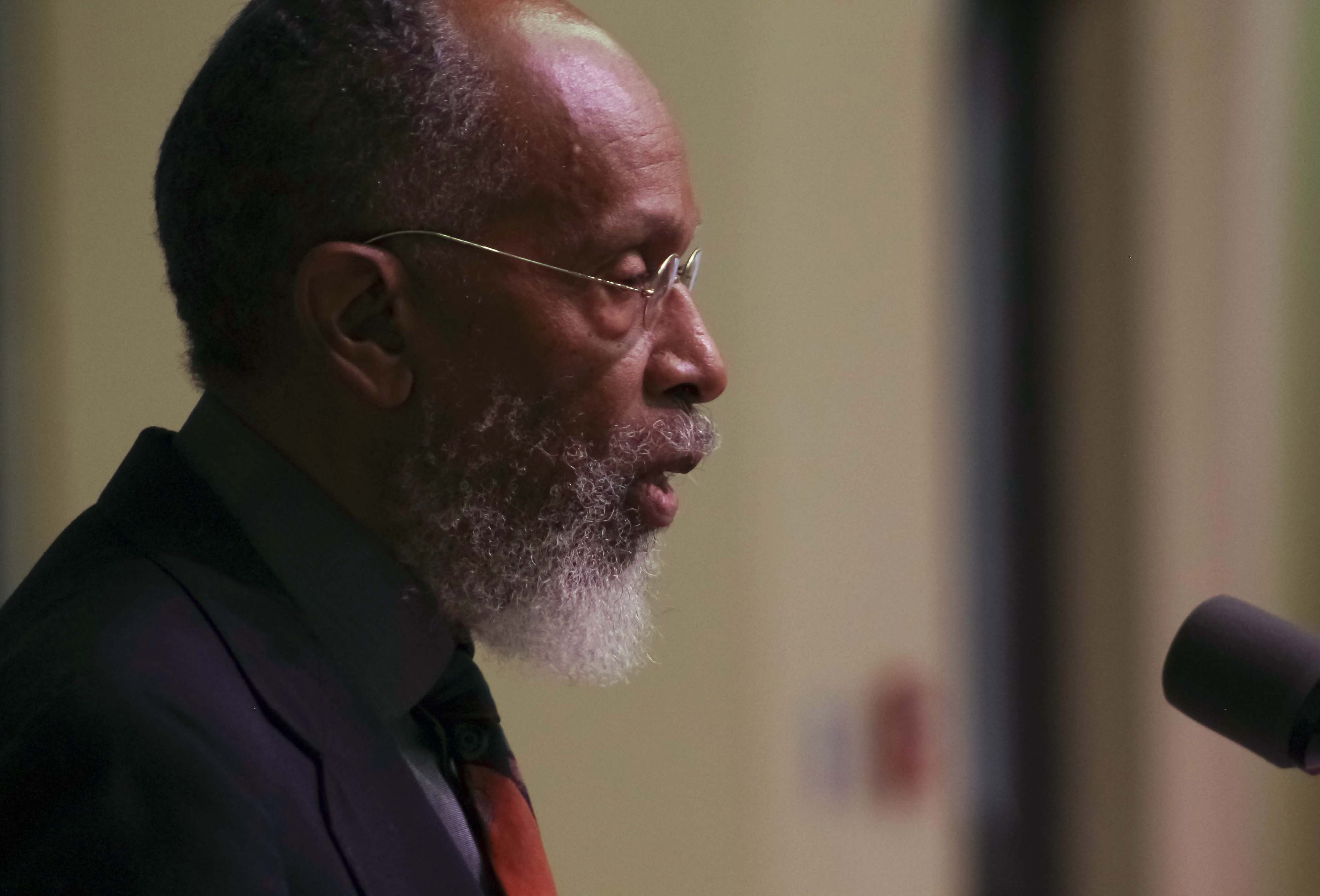
Keynote Speaker: King Davis, Ph.D.

King Davis was appointed professor of research in the School of Information at the University of Texas at Austin in 2014. He was the inaugural director of the Institute for Urban Policy Research & Analysis and holder of the Mike Hogg Endowed Chair in urban affairs at the University of Texas at Austin from 2011 to 2014. Prior to this post, he served as Executive Director of the Hogg Foundation for Mental Health from 2003-2008. He held the Robert Lee Sutherland Endowed Chair in Mental Health and Social Policy at the University of Texas at Austin, School of Social Work from 2000 to 2011. He received the Excellence in Teaching Award from the University of Texas at Austin in February 2001. King was a professor of Public Mental Health Policy and Planning at the Virginia Commonwealth University, Richmond Virginia, from 1984-2000. From 1998-1999, he was the holder of the William and Camille Cosby Endowed Chair at Howard University, Washington D.C. Also in 1998, King was appointed to the Libra Endowed Chair in the School of Business and Public Policy at the University of Maine, and was a Distinguished Visiting Professor at Washington University in St. Louis in 1999. He taught at Norfolk State University School of Social Work from 1974 to 1984.
King was awarded the Ph.D. from the Florence G. Heller School for Social Policy and Management at Brandeis University in 1971. His doctoral work focused on the linkages between public policy, fund raising, non-profit organizations, and communities of color.
King’s professional background and experiences are varied. He is a former Commissioner of the Virginia Department of Mental Health, Mental Retardation and Substance Abuse Services. King was appointed Commissioner by L. Douglas Wilder, Governor of Virginia, and served from 1990 to 1994. As Commissioner he held responsibility for executive leadership and management of a statewide behavioral health care system, comprised of 17 hospital facilities and 40 community service agencies. Prior to the Wilder Administration, he served as director of community mental health services in the administration of Governor Linwood Holton.
King has written and published numerous articles, books, and reports on mental health, managed health care, fund raising, race, and social justice. His funded research focuses on redesigning urban mental health services and preserving historical data on mental health services for African Americans in 18th, 19th, and 20th century Virginia. In 2015, the Andrew Mellon Foundation generously funded faculty in the Information School to continue research on the archives of the Central Lunatic Asylum for Colored Insane – the first mental institution in the US developed exclusively for people of African descent.
Opening Keynote Session on May 16, 2018
“The Central Lunatic Asylum for Colored Insane Archives: Mental Illness, Race, and Privacy in the Digital Age”
This presentation describes a ten-year research and demonstration project at the University of Texas at Austin designed to develop a digital infrastructure for collecting, organizing, preserving, and analyzing 800,000 historical records from Central Lunatic Asylum for Colored Insane (CLACI). A primary goal of the project was to increase access to historical mental health records while adhering to federal and state issues of privacy and confidentiality. The hospital staff maintained almost all of its original records and data on the development and operation of all aspects of the institution, demographic characteristics and treatment of patients who were admitted, and background of the professional staff. The project used mixed methods to catalog the records, contents, and create finding aids. We used content analysis to compare access and privacy policies and the readiness of state mental health and archive departments. And, we randomly surveyed 50 families and 50 historians to determine their interests in accessing historical records. These methods were followed by modifications of existing software (Archivematica, Fedora, Hydra Connect, Zooniverse) to create searchable data bases (files) for the digital library. Analysis of records of the first 30,000 persons admitted (1868-1941) showed a relationship between race, diagnosis, institutionalization and three culturally-based hypotheses, adopted by Virginia physicians and researchers. Parametric statistics were used to show correlations between admission and 34 characteristics of each person admitted to the hospital. Examples of the characteristics include severity of diagnosis, cause of illness, onset, commitment, gender, age, residence, marital status, occupation, education, and mortality.
Conference Proceedings
The 2018 TCDL Conference Proceedings are available in the Texas Digital Library (TDL) repository.
TCDL 2018 Announcements

Sponsors
Thank you to our 2018 TCDL sponsors!




TCDL 2018 Planning Committee
Chair: Eric Ames, Baylor University
Vice-Chair: Clarke Iakovakis, University of Houston-Clear Lake
Lea DeForest, Texas Digital Library
Kara Long, Baylor University
Loryn McCullick, Texas Digital Library
Marcia McIntosh, University of North Texas
Jeremy Moore, Texas State University
Jessica Neal, Trinity University
Krystal Schenk, University of Texas at Arlington
Bethany Scott, University of Houston
Amanda Zerangue, Texas Woman’s University
About the Texas Conference on Digital Libraries
Since 2007, the Texas Digital Library has hosted the annual Texas Conference on Digital Libraries (TCDL). TCDL covers topics relevant to the creation, promotion, dissemination, and preservation of research, scholarship, and cultural heritage digital materials. The goal of TCDL is to bring together those working on digital projects — including outreach librarians, repository managers, catalogers, faculty members, technical staff, and others — in order to build a practical, usable, and sustainable model for digital libraries.
TCDL encourages and welcomes participation from students, scholars, librarians, researchers, faculty, and users from all backgrounds, identities, and experiences. All are welcome!
Read TCDL’s Code of Conduct and Land Acknowledgement.